
After months of waiting and in full confinement for the coronavirus, the government has sent the European Commission the final text of the National Integrated Energy and Climate Plan (PNIEC) 2021-2030. Little has changed from the last draft.
So the initial objectives, such as a 23% reduction in greenhouse gas emissions compared to 1990, are maintained. This reduction target means eliminating one out of every three tonnes of greenhouse gases currently emitted. In addition, it also includes the objective of 42% renewables in the final use of energy, 39.5% improvement in energy efficiency in the next decade and 74% presence of renewable energies in the electricity sector, to make the electricity sector 100% renewable in 2050.
Investments and sectors affected
The PNIEC is accompanied by an analysis of the macroeconomic effects on the Spanish economy and industry, employment and public health. The mobilization of investments, energy savings and a mix in which renewable energies -more affordable- are the protagonists will make it possible for the Gross Domestic Product (GDP) to increase by 1.8% in 2030 compared to a scenario without measures. Specifically, between 16,500 and 25,700 million euros.
The plan estimates a mobilization of 241.4 billion euros between 2021 and 2030, which will be used mainly to promote renewables, savings and efficiency measures, and electrification and networks. 80% of these investments will be made by the private sector. The remaining 20% will be investments from the different public administrations, including European funding, which will activate private investment through actions associated with the promotion of energy saving and efficiency, sustainable mobility and modal shift, fundamentally.
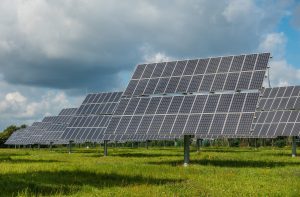
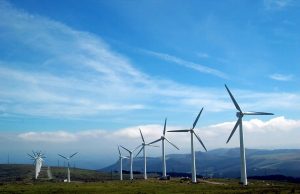
The measures, in addition to raising the emissions reduction from 21% to 23%, would make the final energy use 42% renewable, as well as 74% of the electric energy green. The plan also provides for 58.8 gigawatts (GW) of new renewable power (39 GW solar photovoltaic; 22.3 GW wind; 5 GW solar thermoelectric; 0.8 GW biomass; 0.5 GW hydro), compared to 57.1 GW of new renewable power provided in the previous draft.
Employment increases between 250,000 and 350,000 people
Net employment will increase by between 250,000 and 350,000 people. This is a 1.7% increase over a scenario without the PNIEC measures. This range represents annual net employment, i.e. the additional and non-cumulative jobs that are created each year from 2021 to 2030.
Investments in renewables would generate between 107,000 and 135,000 net jobs per year in 2030; investments in energy savings and efficiency, between 56,000 and 100,000 jobs; and investments in networks and electrification of the economy, some 46,000. Indirectly, the energy shift will create up to 118,000 net jobs in 2030.
It also addresses Transition and energy poverty, and the PNIEC sets indicators and targets for a reduction of at least 25% by 2025. This includes local participation in renewable projects, the promotion of renewable energy from biomass or the promotion of energy efficiency in the residential sector.
Similarly, instruments are proposed to guarantee consumers the right to consume, produce, store and sell their own renewable energy through distributed generation, demand management, the promotion of local energy communities, as well as specific measures to promote the proactive role of citizens in decarbonisation. In this regard, the PNIEC emphasizes the potential for energy retrofitting of buildings and for self-consumption, especially shared consumption.
Impact on the environment and health
The measures contained in the PNIEC not only manage to reduce Greenhouse Gas (GHG) emissions but also those of the main primary pollutants associated with air quality. Thus, the PNIEC measures will reduce the level of PM 2.5 particles by 33%. In the case of sulphur dioxide (SO2), the reduction is 38%, and for nitrous oxides (NOx), the reduction is 35%.
The improvement in air quality for the country as a whole translates into a decrease in health damage in the form of fewer premature deaths, which are reduced by 27% over a context without measures.
